
When Urban Recipe began in 1991, we operated out of a church basement in Grant Park. We ran a singular food co-op, distributing food out of a small pantry and regular household refrigerator.
Fast forward 35 years, Urban Recipe is now one of the largest partners of the Atlanta Community Food Bank. Distributing well over half a million pounds of food last year and feeding about a thousand people through co-ops every two weeks, our operations have grown exponentially in the last thirty-five years.
Our home base is our warehouse at 970 Jefferson Ave, a space that we share with other incredible small businesses and nonprofits like Foodwell Alliance, Second Helpings Atlanta, Westside Future Fund, and Retaaza. This warehouse, formerly the home of the Atlanta Community Food Bank, allows us to store enough shelf stable, frozen, and refrigerated food to support our Food Co-ops and our Mobile Pantry.
This year in particular, Urban Recipe has been working on refining our ever-growing operations, while focusing on maintaining our original co-op model.
Growing Pains
Like all growth, adding four co-ops in the last two and a half years comes with some growing pains. Some of our co-op members have been active in our programs for over a decade, and have lived through the ups and downs.
Our Food Co-op model requires the participation of all of the co-op members at every meeting. This enables growth in community and natural relationships to form. However, some of the members remember a time, during the pandemic, where that participation looked different due to social distancing requirements. When we returned to all in-person meetings, some of the members opted to leave the program due to the change back to the original model.
Co-op members sometimes also reminisce fondly over a time when, due to supply chain issues and grocery surplus during the pandemic, families were going home with large quantities and varieties of meats. Co-op members still receive protein every meeting, which wasn’t always the case, but some members have a hard time when comparing it to the surplus they received consistently in 2021.
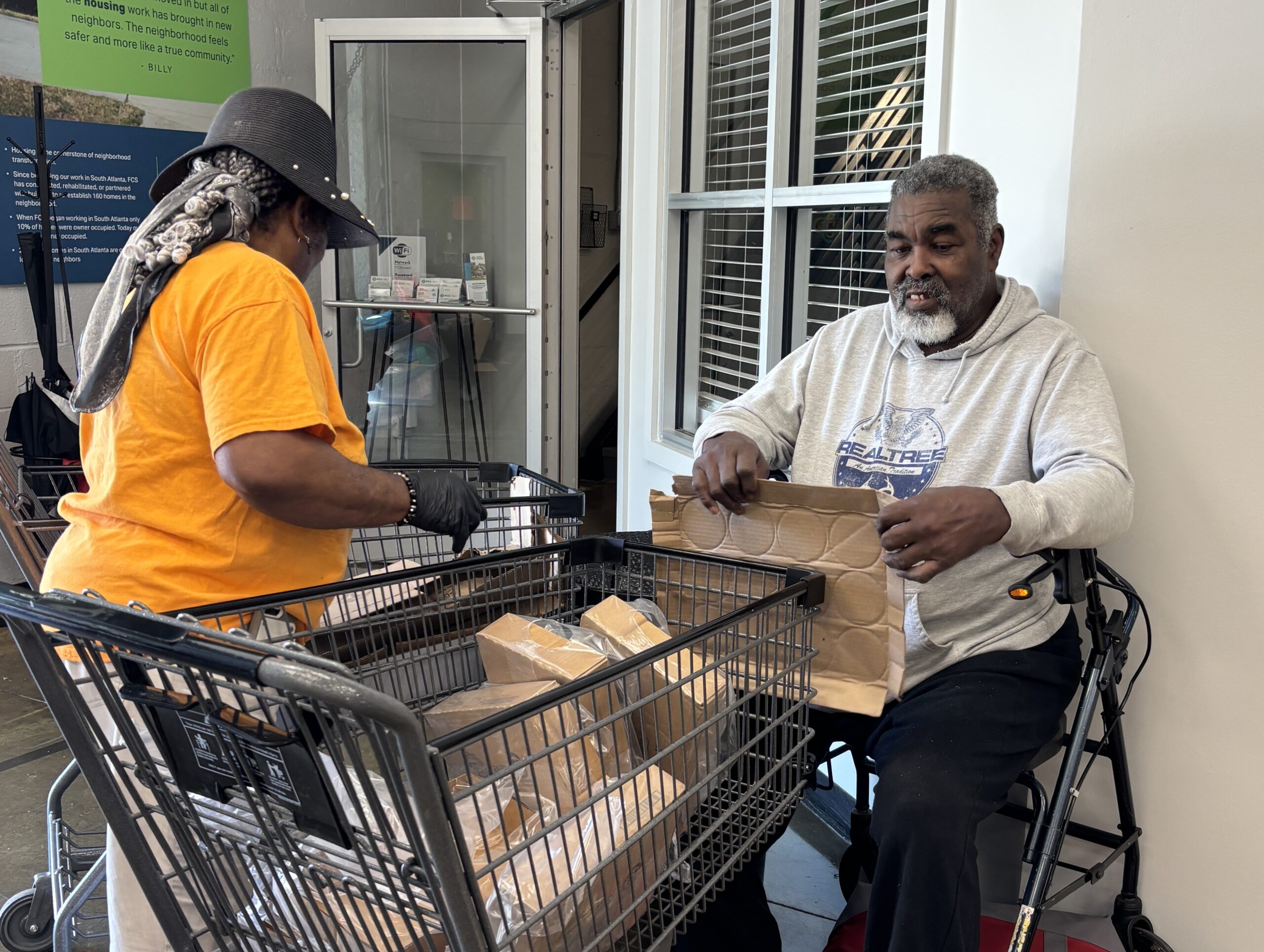
In the warehouse, the growing pains have been met with constant adaptation. When we had a single co-op, members distributed food directly from the pantry. When we had a few co-ops, staff worked together to sort out the food for distribution. Recently, we added volunteers to the mix, and volunteers pack 33 pallets bi-weekly to go out to our co-ops. Within the last few years, we have also added an inventory and labeling system, additional staff to help drive the trucks, new food partnerships to feed the growing need, and more day-to-day changes and refinements to support growth.
Growing Gains
Our Food Co-op model also is built without a scarcity mindset. What we have available is what we distribute out to our families. Some weeks, that is more food and some weeks that is less, though on average families are still walking home with 80 pounds of food every meeting. Historically, especially back in the 1990s and early 2000s, we didn’t have protein or fresh produce available at many meetings. We weren’t able to take into account the preferences of our members.
Because of our partnership with the ACFB and some incredible donation partners, almost every week we are able to offer fresh produce, frozen protein, and a variety of shelf stable items, including canned protein, grains and cereals, on a more consistent basis. We are even currently wrapping up our co-op member Food Preferences survey, as we are able to take into account the food preferences of the people we serve.
Last year, we distributed Halal chicken out to co-ops that have high Muslim populations, more corn flour and dried beans to co-ops with higher Hispanic populations, and more fresh vegetables like collards and sweet potatoes to co-ops that primarily have their roots in the South. Of course, co-op members are introduced to new food regularly, and swap recipes on how to cook and enjoy unfamiliar ingredients, but we are grateful to be able to cater to people’s choices as well. All of these choices were made based on the co-op members’ preferences at their bi-weekly co-op meetings.
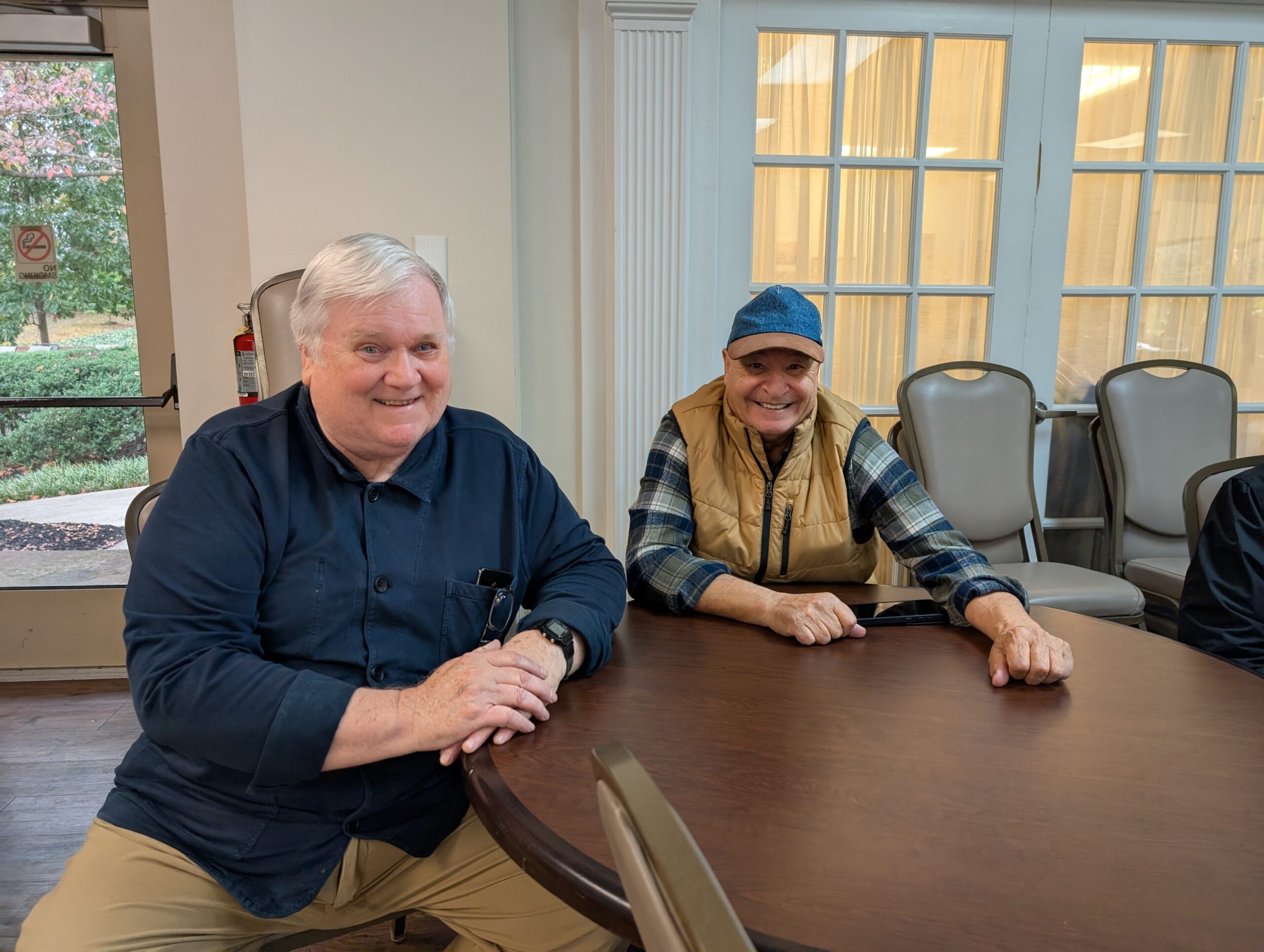
A key to this guided growth is Jamillah Gilmore, our Director of Programs and Operations. She not only oversees our warehouse staff, food movement, operations, and inventory, but she also manages our Food Co-op programs, with the support of Program Manager Reed Stewart. Because she is steeped in not only operations, but the why behind the operations, we are able to navigate this growth.
Everything we do is to support our mission: promoting food security and dignity through intentionally community-driven food cooperatives.