
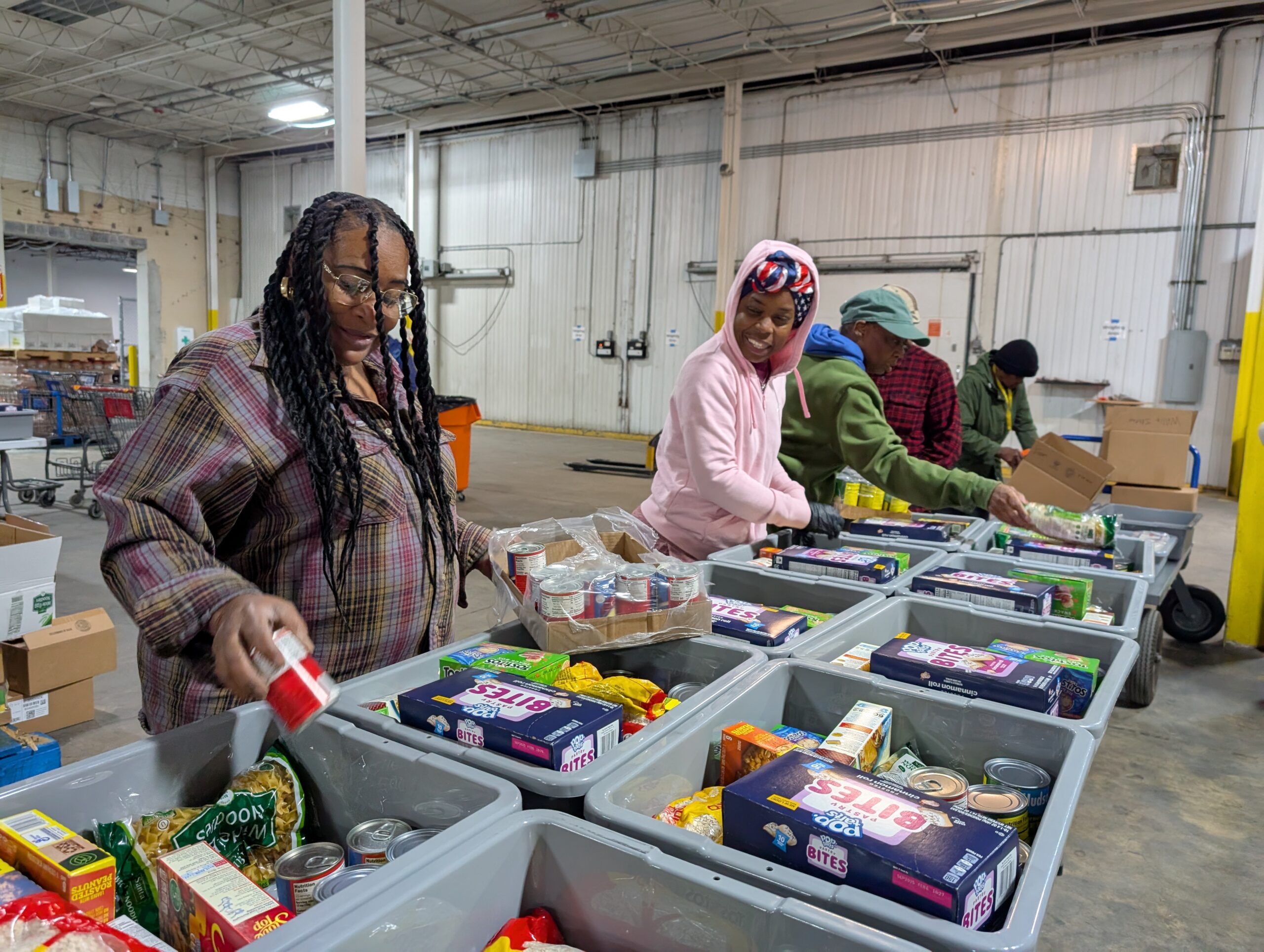
Food prices continue to climb nationwide. In the last year, national grocery bills have risen 2.4 percent. In the remainder of 2026, the USDA predicts a 3.1 percent grocery bill increase. That’s a 5.5% increase in under 2 years!
The biggest offenders in price climbs are meat, including poultry, pork and beef, as well as fresh fruits and vegetables.
While these increases are a noticeable strain to everyone’s budgets, these price hikes are especially detrimental to those living at or below the poverty line. Every month, families are presented with difficult decisions: transportation or breakfast? Utilities or an after-school snack? Rent or groceries?
The vast majority of families living with food insecurity feel stuck. Seniors who have had long and arduous careers who are attempting to make ends meet on social security. Veterans who have made countless sacrifices, yet cannot make do with the limited assistance from disability compensation. Individuals who may not qualify for SNAP or government assistance programs. People who were struck down by an unexpected medical debt that they just cannot recover from. Families with three kids in school and two parents working multiple jobs to pay the bills.
Thankfully, families facing hunger have options for help in Atlanta. Atlanta is a community-centric city, with hundreds of people-focused services and organizations such as Urban Recipe to support their neighbors.
Neighborhood Food Pantries
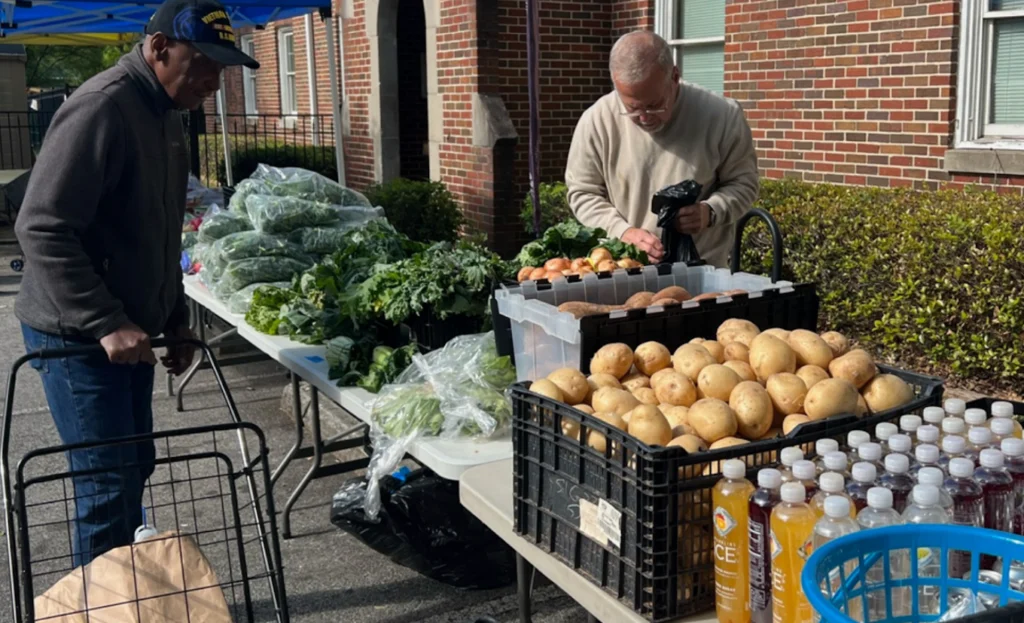
Have you ever driven by a church that has a sign posted out front? You may be comforted to know that people can, in your own neighborhood, find free food support.
What is harder to see on the sign is the limited resources that the vast majority of these pantries have. They often are manned by only volunteers, and are open at inconsistent hours. Because of this, their food supply is also often varied and tends to rely more on shelf-stable items that can fit with a more flexible schedule. Families in need of food may get themselves to the pantry, sometimes dealing with delayed public transit, walking through bad weather, finding childcare for their kids, to find a pantry unexpectedly closed or very low on food.
The flip side of this could also be true – they may be able to receive an unexpectedly large donation of food including fresh produce or meat that needs to be distributed before the end of the day. These pantries do a lot of good, and still the reality is that many of them are inconsistent, which requires patrons to spend a good bit of time and energy gathering the food offered.
Larger Food Pantries
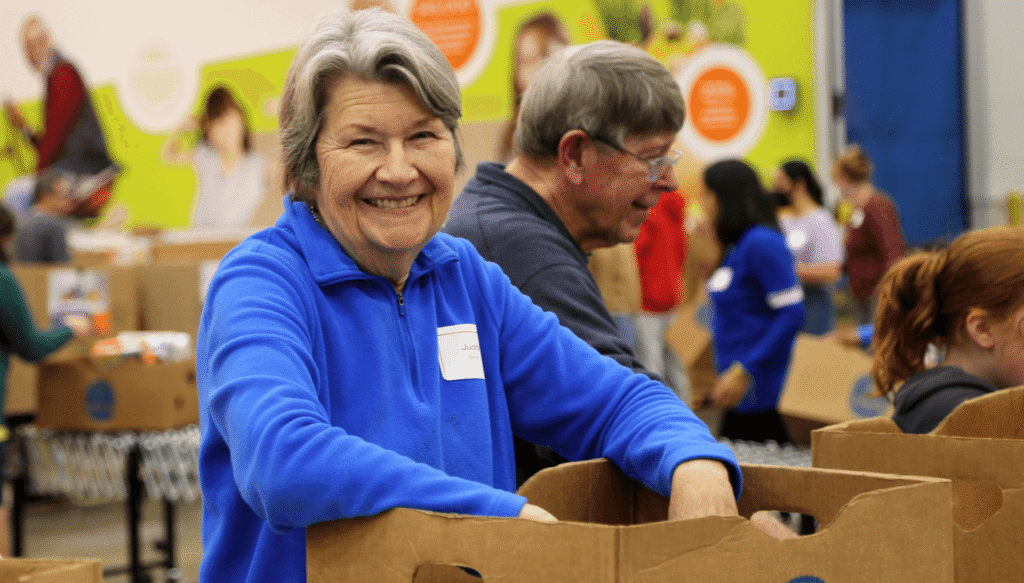
Atlanta has many larger food pantries as well, staffed with paid support, allowing more consistent hours, a higher quality selection of food, and more organized distribution models.
These often follow the client choice pantry model, where families can come “shop” for a certain amount of food. Other models give families a certain type and amount of food based on some qualifying factors (a bag of rice and two cans of beans for a small household for example). While this format can cater to emergency needs and feed many people efficiently, it limits choice. People may go home with a jar of peanut butter they cannot eat due to allergies, or take home a large amount of carbs without any protein to go with it.
The waitlists for these pantries can also become long, or in effort to serve as many people as possible the pantry will give out smaller portions of food to ensure everyone gets some. This results in families needing to visit multiple pantry locations in order to provide for their family.
Food Cooperatives
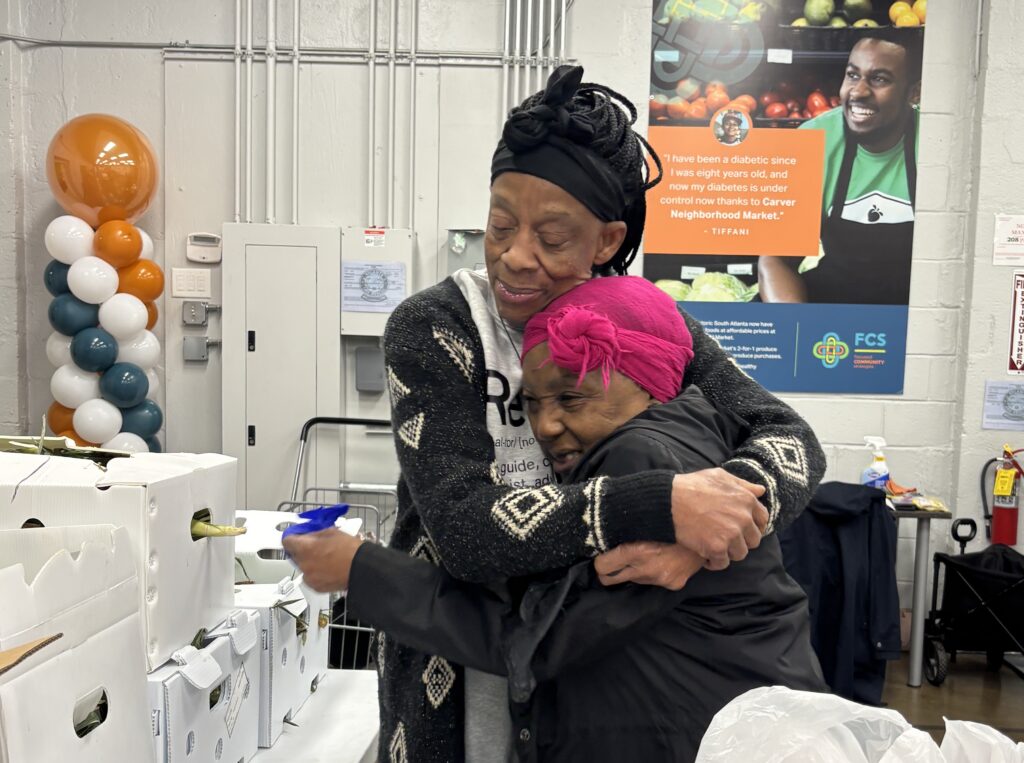
A third model of free food distribution is the food cooperative, or Food Co-op. In this model, families come together on a consistent basis, receiving a consistent amount of food every meeting, and have access to a wide variety of options, including produce, meat, and non-perishables. Families have a chance to decide what they take home, based on their family preferences and needs.
Food Co-ops also require participation, providing not only food, but also community. Because of this community, co-op members are able to receive larger quantities of food than they may at a typical pantry, as the organization knows exactly how many people are showing up, so the food can be distributed equitably instead of being rationed.
However, this model can be challenging for some. It requires consistency from the members, showing up and participating in the meeting, which can be difficult for working individuals. It requires members to be present, which may mean long routes on public transportation, returning with carts that can be bulky to carry home.
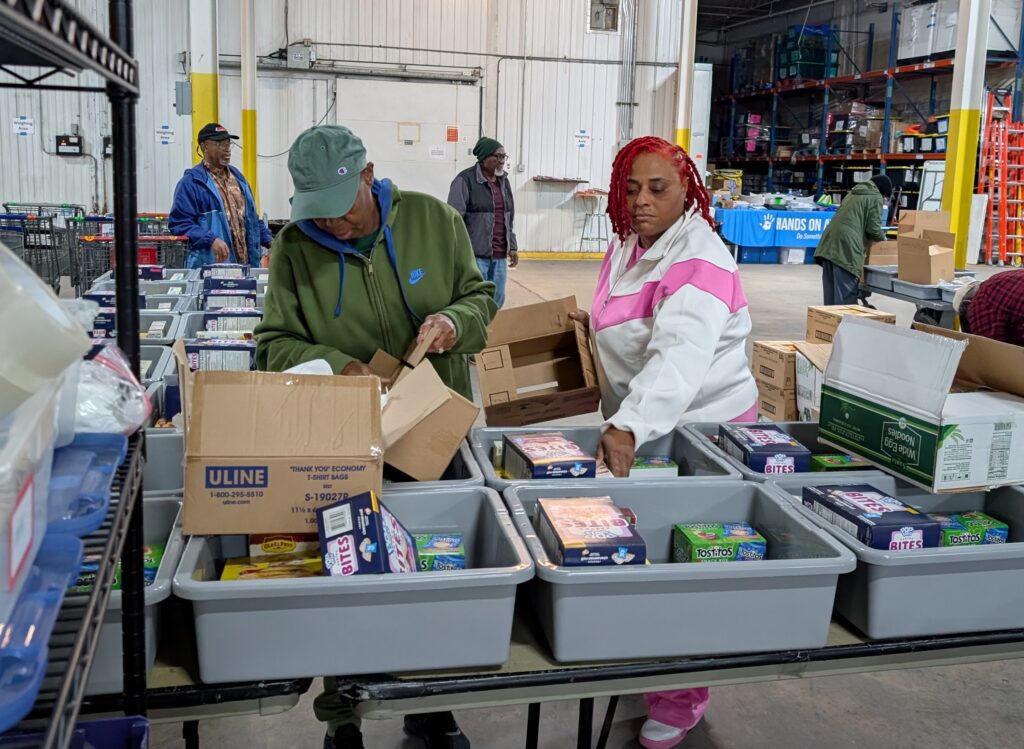
At Urban Recipe, we’ve run Food Co-ops for 35 years, sustaining a model that focuses on dignity, consistency, choice, and abundance. Right now, we are raising funds to continue to support our Urban Recipe Food Co-ops. Consider making a donation to end hunger!
A Solution to the Price of Food
In Atlanta, there is not a perfect solution for food security. People will always feel the burden of rising grocery prices and the stress of feeding their families. However, there are options to supplement limited food sources. This city stands together well to care for its people, focusing on the dignity of every human person.